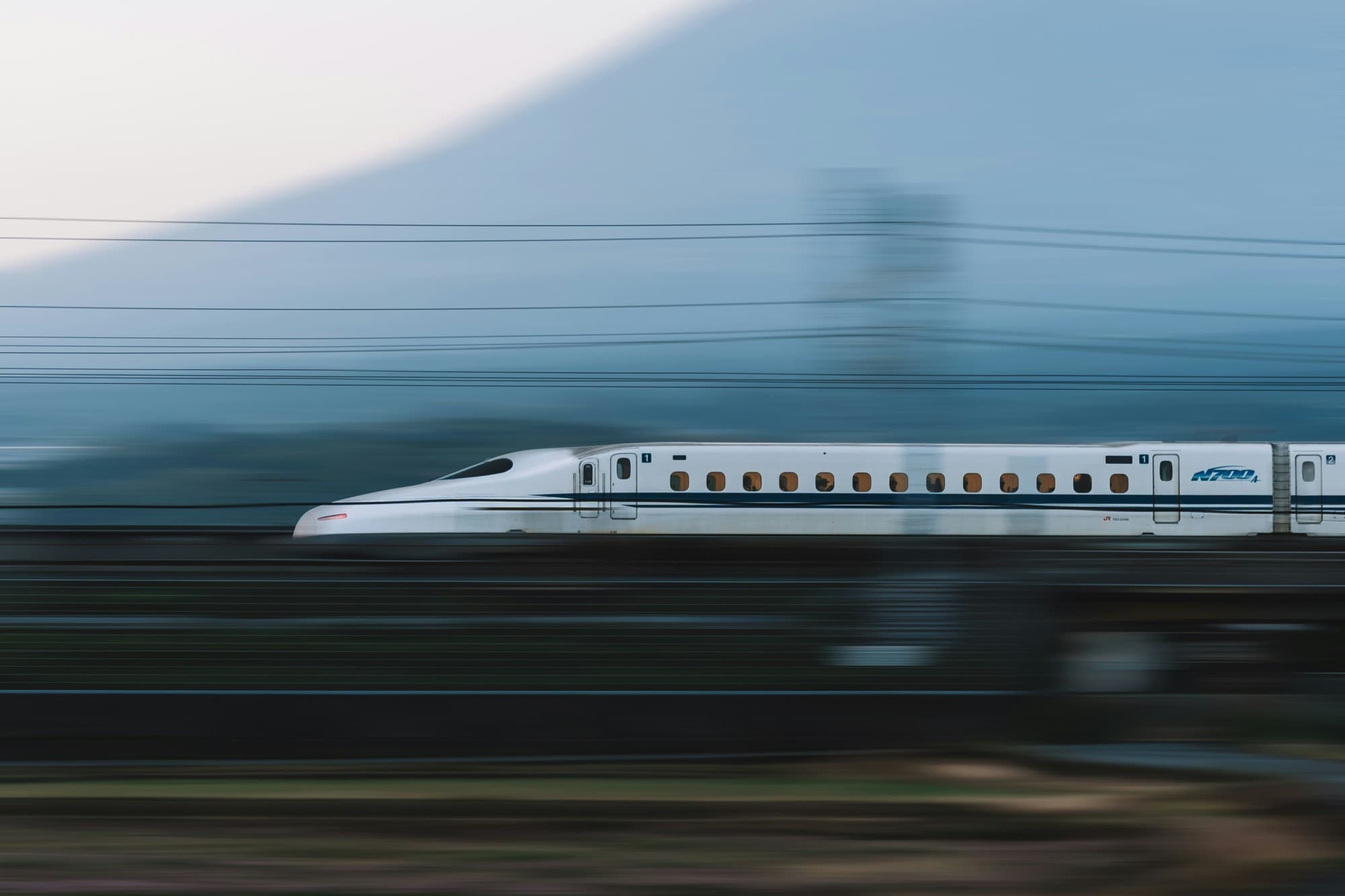
How to travel around Japan by train
Trains in Japan are punctual, clean and fast, and they can take you almost anywhere in the country. But you need to understand the system: there are dozens of railway companies, different types of train and specific rules for luggage. Here are the essentials.
Types of train
- Shinkansen: high-speed trains between major cities. The main line for visitors: Tokyo, Nagoya, Kyoto, Osaka, and on to Hiroshima and Kyushu
- Limited express trains: fast trains on lines without the Shinkansen, for example to the mountains or resorts
- Local and rapid trains: within regions and suburbs
- Private lines: other companies operate besides the JR group. For example, Hakone is easy to reach on the Odakyu private line express from Shinjuku
Tickets and seats
For the Shinkansen and express trains you need a fare ticket and, as a rule, a supplement for speed. Seats are reserved or non-reserved: non-reserved cars are boarded in order of the queue. In peak season and on holidays, especially Golden Week, mid-August and New Year, it is better to reserve seats in advance. There are also first-class cars, called Green Cars.
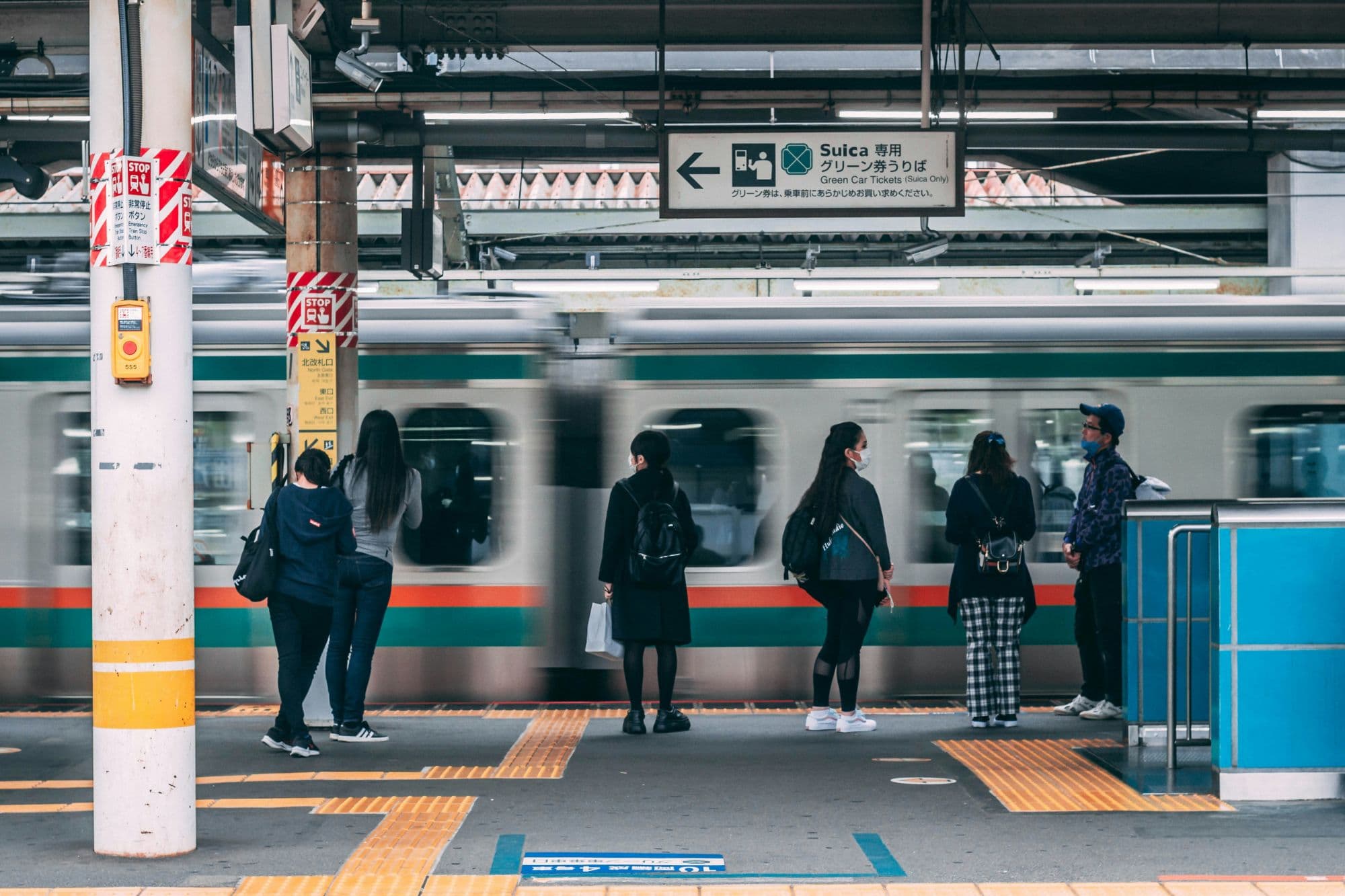
Tickets are sold at ticket offices and machines with an English menu, and for many lines you can buy them online. For getting around a city, IC transport cards (Suica, PASMO, ICOCA) are convenient: they pay for the metro, trains, buses and shops.
Do you need a JR Pass
The nationwide pass for JR trains rose sharply in price in 2023, and for the classic Tokyo, Kyoto, Osaka route separate tickets are now often better value. A detailed breakdown is in the article "Is the JR Pass worth it".
Luggage
The Tokaido, Sanyo and Kyushu Shinkansen have a rule for large luggage: if the three dimensions of a suitcase add up to between 160 and 250 cm, you must reserve a seat with a luggage area in advance, at no extra charge. Without a reservation a fee is charged, and a suitcase over 250 cm cannot be carried. Small suitcases fit on the rack above the seat.
The most convenient way to travel by train is to send suitcases between hotels by delivery service and take a small bag on the train. Luggage usually arrives the next day.
Changing at big stations
Tokyo, Shinjuku, Osaka and Kyoto stations are enormous: dozens of exits, several companies and underground shopping streets. Allow extra time for a change, especially with luggage, and check in advance the number of the exit closest to your hotel.
Etiquette on the train
- People don't talk on the phone in the carriage and step out to the vestibule for calls
- Phones are kept on silent
- Eating on the Shinkansen is normal: stations sell bento boxes for the ride
- On platforms people queue along the markings
- In rush hour in Tokyo and Osaka it is better not to travel with suitcases
Travel times between cities
- Tokyo – Kyoto: a little over two hours on the fastest Shinkansen
- Kyoto – Osaka: 15 minutes by Shinkansen or about half an hour by ordinary train
- Kyoto – Nara: less than an hour
- Kyoto – Hiroshima: about an hour and a half to two hours
- Tokyo – Kanazawa: about 2.5–3 hours
We'll help with the logistics
We work through your route, choose trains and ticket options, reserve seats and plan how to move your luggage. More on our Japan trips page.
We'll help you plan your trip to Japan
Route, hotels, trains and bookings for your dates. Message us and we'll tell you where to start.
Related articles
Get in touch
Let's talk about your route
around Japan
Send us your dates and what you'd like to see. We'll reply within a day with a suggested route.
Free consultation
We reply within 24 hours. We'll talk through your plans and suggest options. No obligation.