Is Taiwan safe to travel on your own?
Taiwan is widely seen as one of the safest places in Asia for independent travel. Street crime is low, people are friendly, and a phone forgotten in a cafe often stays on the table. But no country is completely safe, and Taiwan has its own particular risks: dense traffic, heat, typhoons and earthquakes. Here is what to be ready for.
If you're travelling alone
Solo travel is commonplace in Taiwan, including for women. In the cities there are plenty of people about in the evening, the streets are lit and 24-hour convenience stores are on every corner. The usual rules still apply: don't leave your things unattended in a crowd, let someone know your route, and don't hike alone on little-used mountain trails.
Public transport
The metro in Taipei and Kaohsiung is clean, easy to understand and safe, and announcements are repeated in English. Carriages have priority seats for elderly and pregnant passengers, and people leave them free. Trains between cities run on time and suit independent travel well. Intercity buses are reliable too, but in rural areas they are infrequent, so check the timetable in advance.
Cities at night
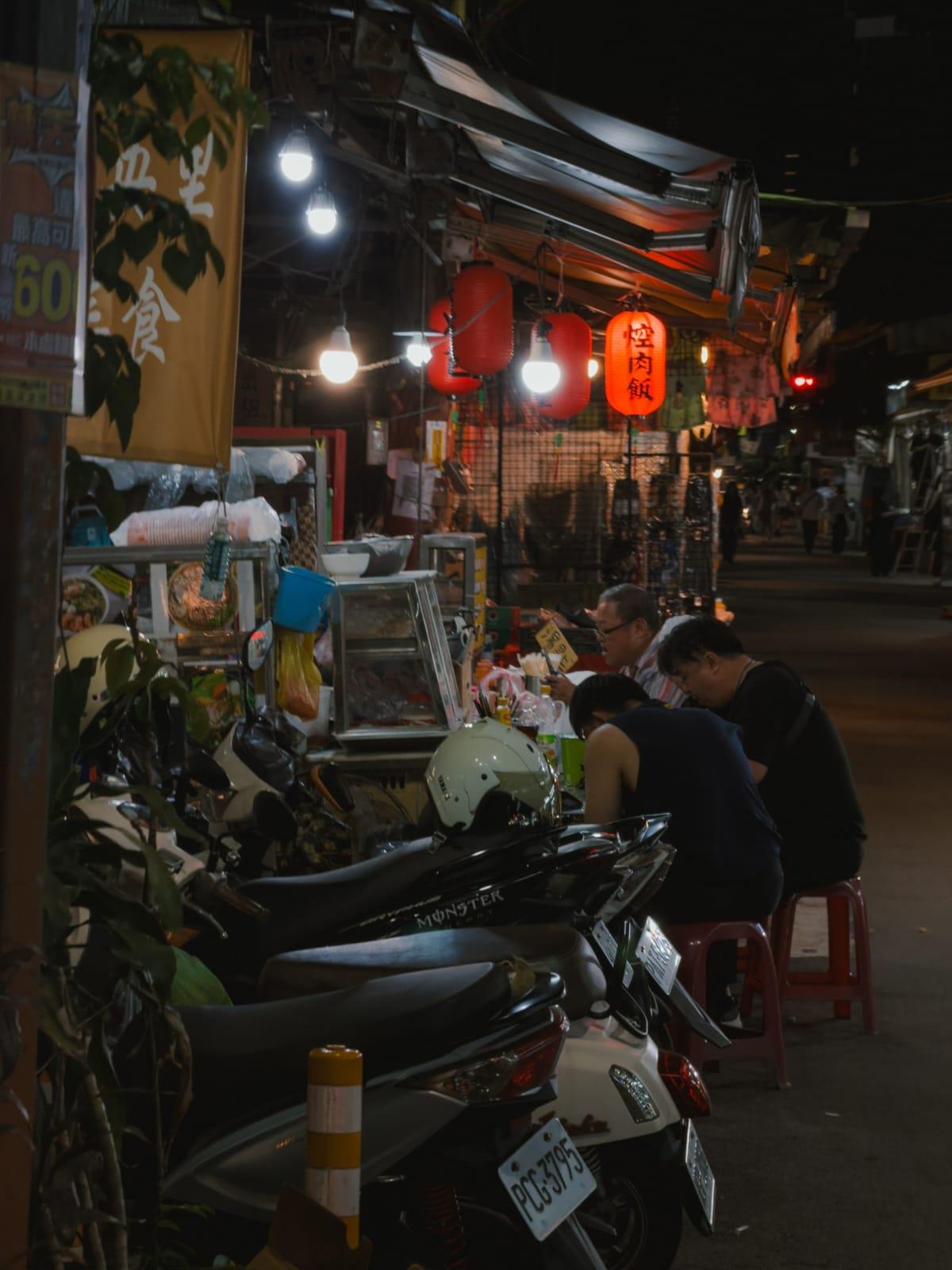
Night markets stay open until midnight and later, and the streets are full of families with children. In the crowds at popular markets keep your phone and wallet on you: pickpocketing is rare but possible. In bar districts the same rules apply as in any big city.
Taxis and apps
- Official taxis are yellow and run on the meter
- Drivers rarely speak English, so keep the address in Chinese on your phone
- Uber works in the big cities and is convenient: you enter the address in the app and know the price in advance
- Tipping is not customary, though you can round up if you like
Scams
The persistent tourist scams you meet elsewhere in the region are almost unknown in Taiwan. Ordinary caution still makes sense: compare prices in tourist shops, don't leave your passport as a deposit with anyone except an official rental company or a hotel, and book accommodation and tours through services you trust.
Everyday things to watch for
- Traffic: there are scooters everywhere, and turning cars don't always give way to pedestrians. Look both ways at a crossing even on green
- Heat and sun: it is easy to overheat in summer, so drink water and plan walks for the morning and evening
- Mosquitoes: in the warm season the south of the island has outbreaks of dengue fever, so repellent is essential
- Tap water: people don't usually drink it unboiled, and hotels and stations have drinking water dispensers
- Mountains: the weather changes fast, and mobile coverage on the trails is patchy
Typhoons
The typhoon season usually runs from summer to autumn, and typhoons most often arrive in July–September. The authorities publish warnings in advance, and in a strong typhoon they declare a day off, close mountain roads and cancel ferries and some flights. In practice this means leaving a spare day in your route in these months and not planning mountains or islands for the very end of the trip.
If a typhoon is announced, stay in your hotel, stock up on water and food at the nearest convenience store and follow the news. Most typhoons pass in a day or two.
Earthquakes
Taiwan is in a seismically active zone, and small tremors are frequent. Residents barely notice most of them. Buildings are built to seismic codes. During a strong earthquake, take cover under a table or by a load-bearing wall, keep away from windows, don't run outside while the shaking continues and don't use the lift. In the mountains, rockfalls are possible after strong tremors, so follow the instructions of the emergency services.
What to save on your phone
- 110: police
- 119: fire service and ambulance
- 0800-011-765: the tourist hotline, open around the clock in Chinese, English, Japanese and Korean
- Your hotel address in Chinese
- Your travel insurance contacts
Many countries are represented in Taipei by a representative office rather than an embassy, so find out in advance which office handles consular matters for your country and save its contacts. There is no Russian embassy in Taiwan: for Russian citizens, consular matters are handled by the Representative Office in Taipei for the Moscow-Taipei Coordination Commission on Economic and Cultural Cooperation. What else Russian citizens need to know, from the visa to money and connectivity, is in the article on travelling to Taiwan for Russian citizens.
Healthcare and insurance
Healthcare in Taiwan is of a good standard, and the big hospitals have English-speaking doctors. For foreigners without local insurance, treatment has to be paid for, so travel insurance is essential. If you plan to go hiking, scuba diving or motorcycling, check that your policy covers it.
In short
Taiwan is a great place for independent travel, even on a first trip to Asia. The main risks here come from the roads and from nature, not from people. A good plan with backup options helps you prepare for them. If you like, we can plan your trip and stay in touch while you travel, to help if something doesn't go to plan. Also have a look at the guide to a first trip to Taiwan.
Want to travel with a guide?
We'll plan a route for your dates, pace and group. Message us and we'll send a programme and a price range.


Related articles
Get in touch
Plan your tour
of Taiwan
Send us your dates and what you'd like to see. We'll reply within a day with a suggested route.
Free consultation
We reply within 24 hours. We'll talk through your plans and suggest options. No obligation.