The best cities in Taiwan to visit
Taiwan's cities are strikingly different. Taipei, the capital, is a modern metropolis with skyscrapers and a metro. Tainan is a city of temples and street food where time seems to have stopped. Kaohsiung is a port city that has turned itself into an art space over the past decade. Each has its own rhythm, its own food and its own atmosphere.
The capital of Taiwan
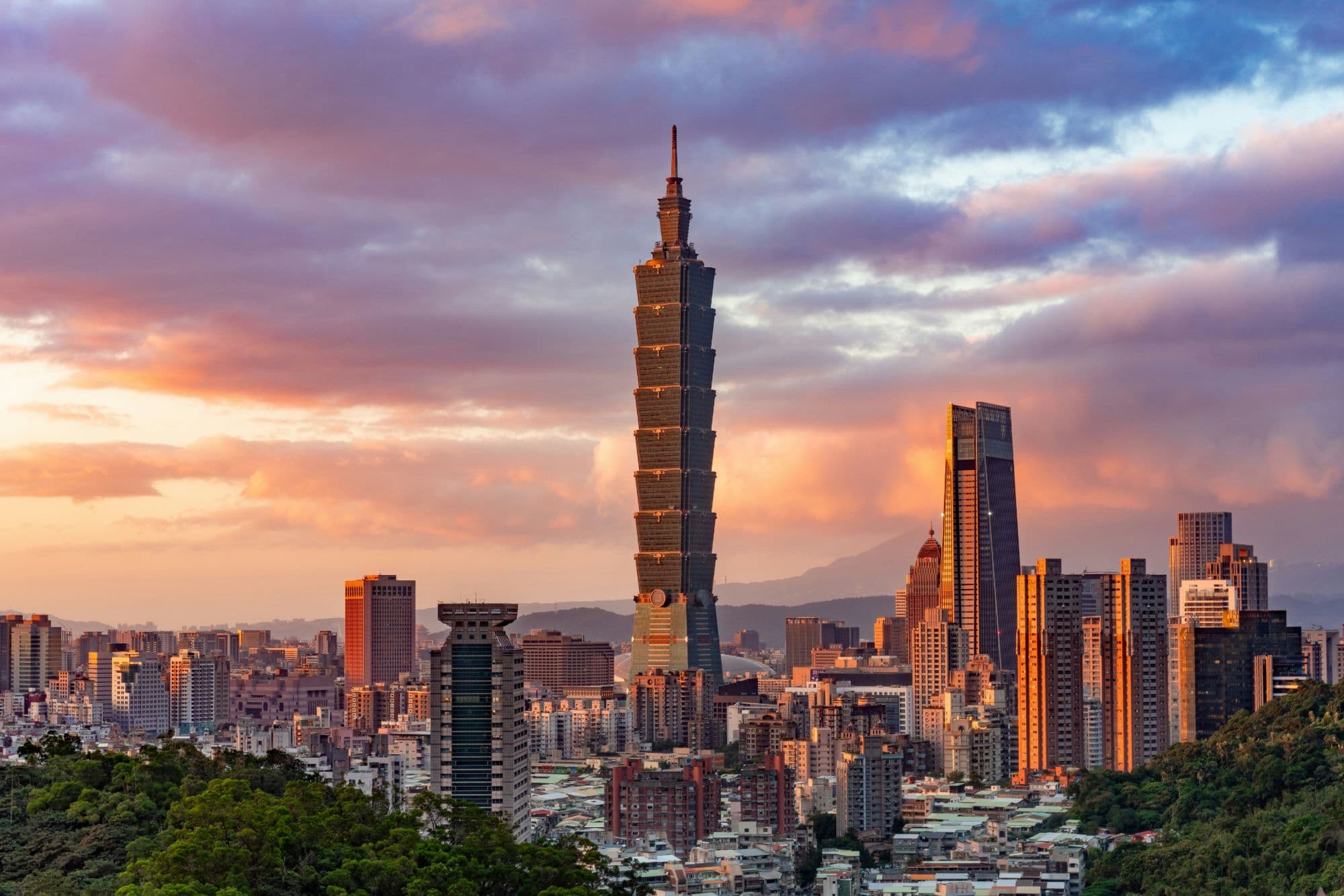
Taiwan's capital, Taipei, is in the north of the island. The government and the main institutions are here, most international flights arrive here, and it takes about 40 minutes on the airport metro express from Taoyuan Airport to the centre. About 2.5 million people live in Taipei itself, and together with New Taipei, which surrounds it, and the port of Keelung, it forms one urban area of roughly 7 million.
The largest cities in Taiwan
Taiwan has six special municipalities. By population they rank roughly in this order:
- New Taipei: about 4 million residents, forming a ring around the capital. Jiufen, Yehliu and Shifen Waterfall are here
- Taichung: about 2.8 million, the centre of the island and a base for trips to Sun Moon Lake
- Kaohsiung: about 2.7 million, the main city of the south and a major seaport
- Taipei: about 2.5 million, the capital and the starting point of most trips
- Taoyuan: about 2.3 million, home to the main international airport
- Tainan: about 1.9 million, the old capital, with temples and street food
For travellers, a city's size matters little. The most interesting for visitors are Taipei, Tainan, Kaohsiung, Taichung and the small city of Hualien on the east coast: each is covered below.
Where the cities are on the map
- North: Taipei, New Taipei, Keelung, Taoyuan and Hsinchu
- Centre: Taichung and Chiayi, the starting points for the mountains, Sun Moon Lake and Alishan
- South: Tainan, Kaohsiung and the Kenting peninsula with its beaches
- East: Yilan, Hualien and Taitung, between the mountains and the Pacific
The west coast is linked by the High Speed Rail, so the cities there are close to each other in travel time. Ordinary trains and mountain roads lead to the east, so allow more time for it. More on how many days to give each part of the island in the article how many days you need in Taiwan.
Taipei: where every route begins
The capital is the natural starting point for any trip: an international airport, an excellent metro and hotels for every budget. Taipei deserves three full days: the Taipei 101 observatory, the old quarters of Wanhua, the National Palace Museum with one of the world's largest collections of Chinese art, and the Xinyi district with its rooftop bars.
For food, Taipei means dozens of night markets and restaurants with Michelin stars. The Yongkang Street area deserves special mention for the famous xiaolongbao (steamed soup dumplings) at Din Tai Fung. A detailed route is in our article on three days in Taipei.
Tip: buy an EasyCard at a metro station. It works on public transport, in shops and even at night markets, and can be topped up at any 7-Eleven.
Tainan: the city you visit to eat
People come to Taiwan's old capital to eat: milkfish soup for breakfast, shrimp rolls for lunch, rice pudding for dessert. Recipes here are handed down through the generations. Many places open at six in the morning and close by lunchtime, when the day's batch has sold out.
Besides the food, Tainan has more than a hundred temples, the 17th-century Dutch Fort Zeelandia, Japanese colonial buildings and Shennong Street with its colourful facades. Two days are enough to fall in love with the city.
Kaohsiung: the city by the sea
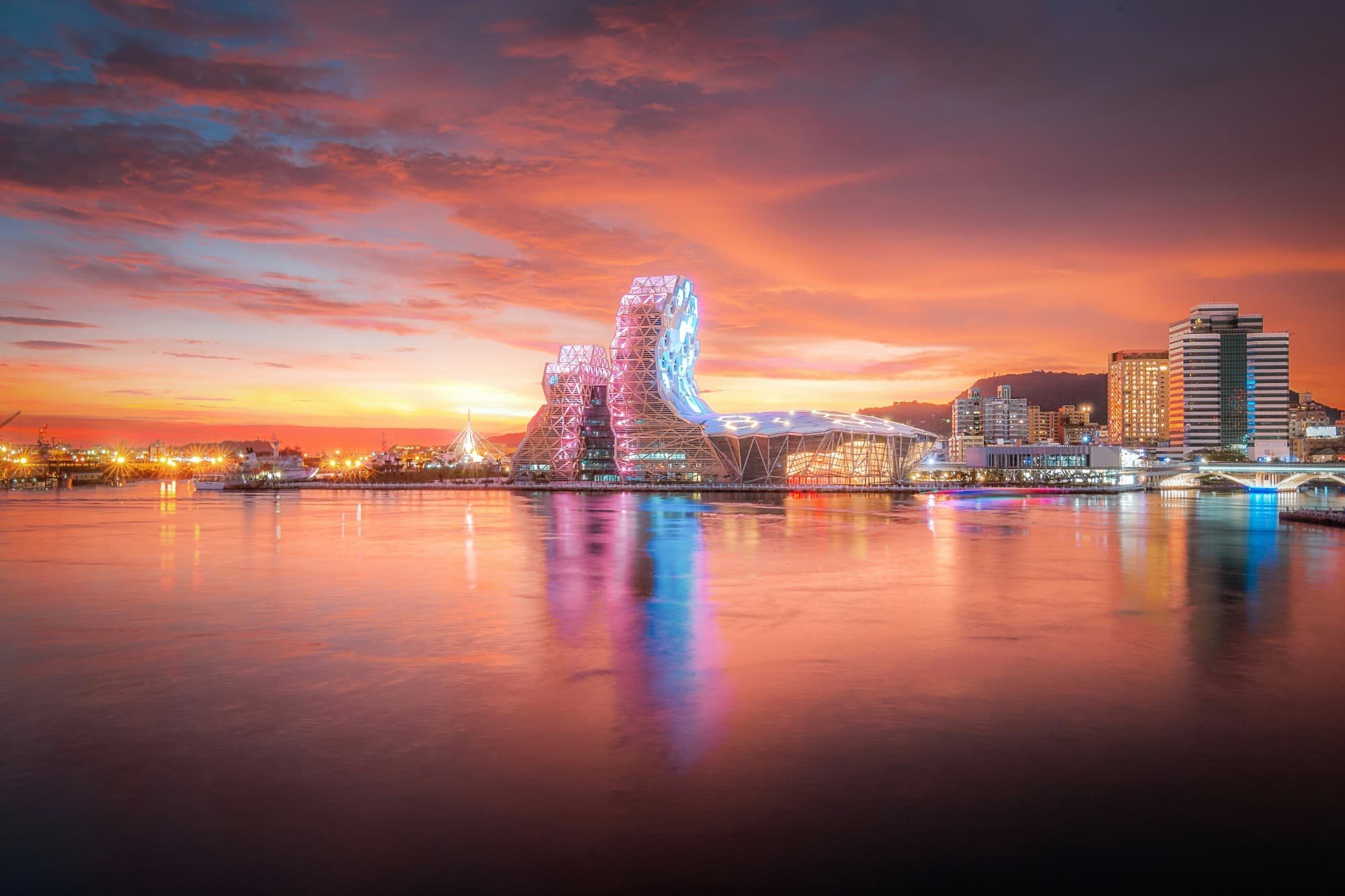
The main city of southern Taiwan was once above all an industrial port. In recent years it has been transformed: the Love River waterfront has become a place for walking, former warehouses have turned into galleries, and the metro has become an underground museum. Formosa Boulevard station, with its dome of coloured glass by an Italian artist, is considered one of the most beautiful in the world.
From Kaohsiung it is easy to head south, to Kenting with its beaches and to Xiaoliuqiu Island. The city is also linked to Taipei by High Speed Rail: two hours, and you are at the other end of the island.
Taichung: the cultural middle
Taichung is in the centre of the island and is often left out of standard routes. That is a mistake: it is home to Rainbow Village, the house of an elderly veteran who painted an entire block with bright murals. The CMP Block Museum of Arts area brings together art, design and food in former military barracks.
Taichung is the gateway to Sun Moon Lake and the Alishan mountains. If you're building a route through the centre of the island, it makes sense to stay the night here.
Hualien: the gateway to wild nature
A small city on the east coast and the main base for visiting Taroko Gorge. But Hualien is interesting in itself: a waterfront with a view of the Pacific, Qixingtan pebble beach and Dongdamen Night Market with dishes from indigenous cuisine.
More on Taroko National Park in a separate article. And if you're planning a full trip that includes the east coast, see our 10-day itinerary.
Other cities worth your attention
Chiayi
The starting point for the climb to Alishan, a mountain area with centuries-old cypress forests, sunrises above the clouds and an old narrow-gauge railway.
Taitung
The most relaxed city in Taiwan: hot springs in riverbeds, indigenous villages and rice fields stretching to the horizon. Ferries to Green Island and Orchid Island leave from here.
Hsinchu
A city of science and technology, Taiwan's Silicon Valley. Visitors come for the City God Temple and a windy coast with the best kitesurfing conditions on the island.
How to build a route through the cities
The High Speed Rail (HSR) links the west coast from Taipei to Kaohsiung in two hours. The east coast is served by ordinary trains and buses. The classic route: Taipei (2–3 days) → Hualien/Taroko (1–2 days) → Taichung (1 day) → Tainan (1–2 days) → Kaohsiung (1–2 days).
If you'd like every detail of the route worked out for you, with no time lost on transfers, a custom tour with a guide is the easiest way to do it. We handle the logistics and you get the most out of the trip. You'll find ready-made routes on our Taiwan tours page.
Want to travel with a guide?
We'll plan a route for your dates, pace and group. Message us and we'll send a programme and a price range.


Frequently asked questions
Short answers to the questions people ask most about this topic.
Taipei. It is a city in the north of the island where the government and the main institutions are based. Most international flights arrive here, and it takes about 40 minutes on the airport metro express from Taoyuan Airport to the centre.
By population the biggest is New Taipei, with about 4 million residents. It surrounds the capital, so visitors often go there without noticing: Jiufen, Yehliu and Shifen Waterfall are all in New Taipei.
Usually Taipei and its surroundings, Hualien with Taroko Gorge, Taichung with Sun Moon Lake, and the south with Tainan and Kaohsiung. A week to ten days suits this loop well.
On the west coast the High Speed Rail is the most convenient: about two hours from Taipei to Kaohsiung. Ordinary trains run to the east coast, and the mountains are easier to reach by car or with a guide and transport.
The base for the first days is almost always Taipei: it is convenient for trips to the north coast and the hot springs. After that you change hotels as the route moves on, usually every 1–3 days.
Related articles
Get in touch
Plan your tour
of Taiwan
Send us your dates and what you'd like to see. We'll reply within a day with a suggested route.
Free consultation
We reply within 24 hours. We'll talk through your plans and suggest options. No obligation.